

Southeast Arizona: A Paradise for Birders

Updated: Jul 24

Southeast Arizona stands as one of North America’s premier birding destinations, offering an extraordinary diversity of species that draws birders from around the world. The region’s exceptional biodiversity stems from its position at the intersection of multiple ecosystems. Here, species from Mexico’s Sierra Madre mountains reach their northern limits, while North American species extend southward. The dramatic elevation changes, from desert valleys at 3,000 feet to mountain peaks exceeding 9,000 feet, compress multiple zones into relatively short distances, allowing birders to experience vastly different habitats within a single day.
A Landscape Built for Bird Diversity

Southeast Arizona regularly records over 350 bird species, with approximately 15-20 species found nowhere else in the United States. This includes sought-after Mexican species making the region essential for North American listers. The area is renowned for its hummingbirds, with up to 15 species recorded, including rarities like the Lucifer, Berylline, and Violet-crowned Hummingbirds. The colorful Coppery-tailed Trogon, a jewel-toned species that inhabits sycamore-lined canyons, ranks among the most coveted sightings for visiting birders. Other regional specialties include Five-striped Sparrow, Sulphur-bellied Flycatcher, Red-faced Warbler, and Buff-collared Nightjar. Raptors are equally impressive, with Zone-tailed Hawk soaring alongside Turkey Vultures and both Gray Hawks and Common Black Hawks nesting in riparian corridors.
Habitats That Tell a Story

Beyond the impressive bird list, birding in Southeast Arizona means experiencing dramatic landscapes, from saguaro-studded bajadas to towering ponderosa pines. It means watching monsoon clouds build over distant ranges and discovering hidden canyons where water still flows year-round. The Chiricahua Mountains, one of the most iconic Sky Islands, add an entirely different dimension to Southeast Arizona. Here, towering hoodoos, volcanic rock formations, and lush canyon forests create mosaic habitats unlike anywhere else in the region. For most birders, Southeast Arizona isn’t just another destination, it’s a pilgrimage to one of North America’s most biodiverse corners, where the possibilities on any given day remain genuinely exciting. Every canyon, grassland, riparian corridor, and sky‑island forest provide a different combination of food, shelter, water, and seasonal refuge. That’s why this region is so extraordinary: its tight mosaic of habitats supports an incredible range of species, each adapted to a specific slice of the landscape. As you move through these environments, you are not just changing scenery, you are stepping into entirely different birdlife shaped by elevation, climate, and the rhythms of the desert.
When to Visit Southeast Arizona
One of the reasons Southeast Arizona is such a legendary birding destination is that every season offers something different. With dramatic elevation changes, from desert basins to sky‑island peaks, birdlife shifts constantly throughout the year. Instead of a single “best” time, Southeast Arizona has four distinct birding seasons, each with its own character, specialties, and surprises.
Winter (December–February)
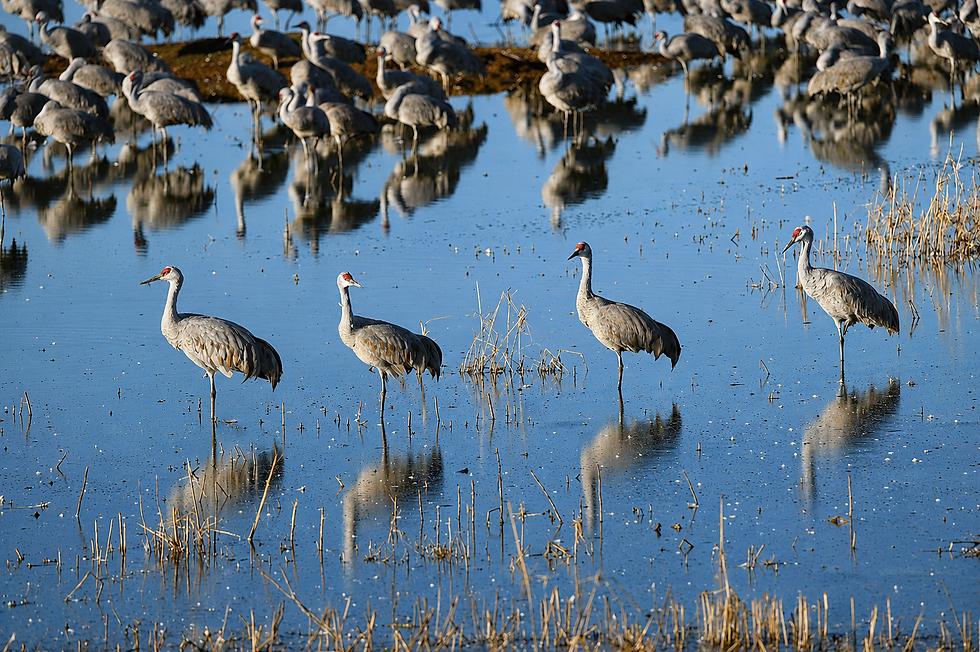
Winter brings crisp mornings, golden light, and wide‑open landscapes full of life. Desert valleys and grasslands host an impressive mix of sparrows, raptors, and wintering specialties, but the season's most unforgettable experience is the massive gathering of Sandhill Cranes. Each winter, tens of thousands of Sandhill Cranes roost in the agricultural valleys of Southeast Arizona, filling the sky at dawn and dusk with their bugling calls and sweeping V-shaped flights. Watching them lift off in the morning cold or spiral back to their roost at sunset is one of the region's great natural spectacles; a moment that stays with you long after you leave the desert.
Beyond the cranes, winter brings its own richness: sparrow flocks moving through the grasslands, Ferruginous Hawks and Prairie Falcons patrolling open country, and familiar desert species like Cactus Wren and Curve‑billed Thrasher adding their voices to the quiet season. Winter here is peaceful, luminous, and full of life; a time when the desert reveals its softer, more contemplative side.

Spring (March–May)
Spring in Southeast Arizona feels like the landscape is inhaling after winter; everything loosens, brightens, and begins to move. The mornings are cool, the light is soft, and the canyons wake slowly, one bird at a time. This is a season defined by anticipation: migrants returning from the tropics, canyon specialties tuning up their songs, and the first Coppery‑tailed Trogons slipping back into their breeding territories with that unmistakable, resonant call. As the days lengthen, the region becomes a tapestry of motion and sound. Painted Redstarts flash through shaded ravines like sparks of living color, their foraging dances echoing off canyon walls. Hummingbird diversity climbs steadily with Broad‑billeds, Rivoli’s, and Blue‑throated Mountain‑gems working the higher canyons, and early migrants beginning to trickle through.
Spring is the season when Southeast Arizona feels vibrant and newly awakened; a time when every trail, canyon, and patch of habitat holds the promise of something returning, something singing, or something just arriving on the wind.
Summer (June–August)
Summer in Southeast Arizona is bold and electric, shaped by the arrival of the monsoon. Mornings start bright and warm, but by afternoon the mountains build towering storm clouds, thunder rolls through the canyons, and the desert comes alive with fresh growth and insect activity. Birds respond instantly; this is peak season for hummingbirds, with up to 15 species swirling through canyons, riparian corridors, and feeders. Tropical specialties like Sulphur‑bellied Flycatchers and Buff‑collared Nightjars reach their seasonal peak, while the sky islands offer cooler air and high‑elevation gems such as Red‑faced and Olive Warblers. Breeding activity is everywhere, and night birding becomes especially rewarding with owls and nightjars active after dark.
Despite the heat in the lowlands, mornings are spectacular, and the mountains provide a refreshing escape. For many birders, summer is the season when Southeast Arizona feels most alive; unpredictable, electric, and overflowing with species that appear nowhere else in the United States.
Rivoli's Hummingbird © Oscar Carmona Violet-crowned Hummingbird © Oscar Carmona
Fall (September–November)
Fall in Southeast Arizona arrives quietly, with soft shifts in light and color as the monsoon greens fade into warm autumn tones. The canyons feel calmer, the air cools, and the pace of birding becomes more reflective. Migration continues in gentle waves as warblers and vireos move through riparian corridors, while lingering summer species add a final splash of energy before heading south. In the grasslands, the first winter sparrows return, and raptors begin to reappear over open country. Morning light turns golden and low, creating some of the best photography conditions of the year. With cooler temperatures and fewer visitors, fall offers peaceful trails, subtle transitions, and a rewarding mix of late‑summer holdovers and early‑winter arrivals.
Fall is subtle but deeply rewarding. It’s a season for birders who enjoy slower mornings, quieter trails, and the gentle overlap of summer’s last notes and winter’s first arrivals. In many ways, it’s Southeast Arizona at its most peaceful; a time when the landscape invites you to linger, listen, and take in the beauty of transition.
Explore Southeast Arizona With Us

Beyond the impressive bird list, birding in Southeast Arizona means immersing yourself in landscapes as dramatic as the species they hold. Towering sky islands, volcanic hoodoos, quiet desert valleys, and lush riparian corridors create a backdrop where every outing feels like a small adventure. This is a region that rewards patience and curiosity, the kind of birding where you slow down, listen, and let the habitat reveal its secrets one moment at a time. Whether you are a first‑time visitor adding lifers by the dozen or a returning enthusiast chasing that rare vagrant, Southeast Arizona offers discoveries that feel personal, unexpected, and unforgettable.
Ready for your own Southeast Arizona Birding Adventure?
Southeast Arizona’s blend of desert valleys and sky‑island forests create an unforgettable birding experience, and every season brings its own surprises. We’d love to share these landscapes with you on an upcoming tour.
Stay Connected! Be the first to know about new and upcoming tours, trip reports, photos, updates, field notes, and more.

