

Colorado: Birding Across the Continental Divide

Updated: Jul 24

Colorado stands as a top birding destination, where the spine of the continent creates dramatic landscapes and extraordinary avian diversity. From the windswept shortgrass prairie of the eastern plains to alpine tundra, the Centennial State offers birding experiences found nowhere else. With over 500 documented bird species and habitats ranging across 14,000 feet of elevation change, Colorado delivers year-round opportunities; whether chasing all six of Colorado’s iconic grouse species or exploring the state’s rugged mountain ecosystems, this is birding that feels both immersive and unforgettable.
Why Colorado Is Special for Birders
Colorado is one of the most unique birding destinations in North America because its landscapes stack vertically, creating distinct worlds of birds layered across elevation. Few places offer such a dramatic shift in habitats within such short distances, and each zone holds species found nowhere else in the country.
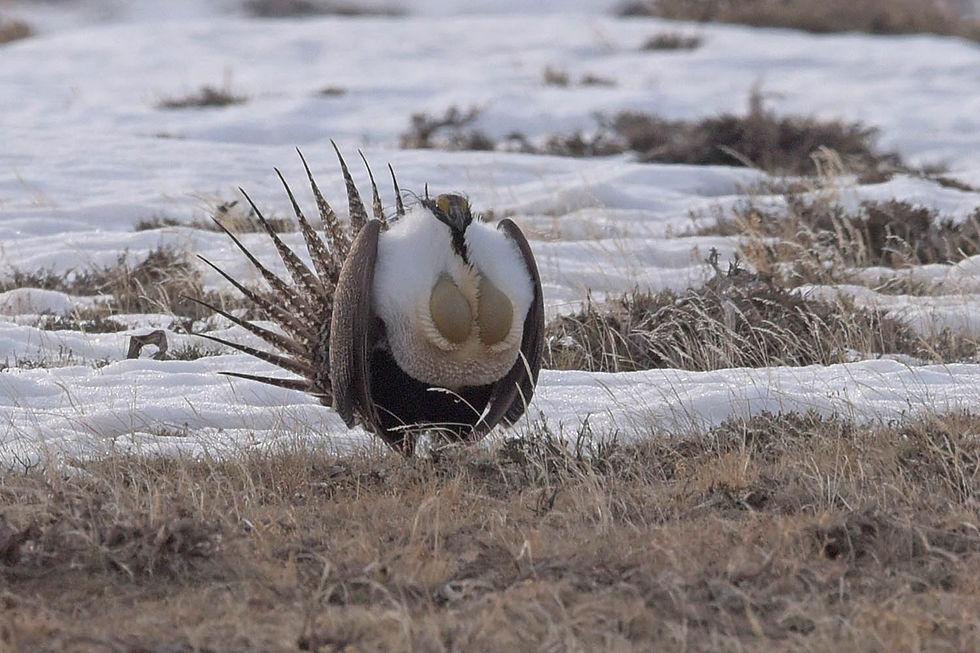
For many birders, the draw begins with the grouse. Colorado is one of the only states where you can seek all six native grouse species, each tied to a specific habitat and seasonal rhythm. Greater and Gunnison Sage‑Grouse boom on open sage flats at dawn, Sharp‑tailed Grouse dance on grassy ridgelines, Greater Prairie-Chickens resonate across the eastern plains, Dusky Grouse hoot from subalpine forests, and White‑tailed Ptarmigan vanish into the high tundra. These displays are ancient and tied to the land in a way that makes every pre‑sunrise outing feel like a privilege.
But the magic doesn’t end with grouse. The mountains hold their own cast of specialties: rosy‑finches swirling over windswept ridges, Clark’s Nutcrackers calling across high valleys, Pine Grosbeaks feeding quietly in spruce‑fir forests, and American Three‑toed Woodpeckers working the bark of old conifers. In summer, wildflowers blanket the meadows and the high-country fills with warblers, sapsuckers, and crossbills. In winter, the alpine world transforms into a stark, beautiful landscape where ptarmigan and rosy‑finches steal the show.
What makes Colorado truly special is the sense of discovery that comes with moving through these elevations. One hour you are watching sage‑grouse dance in the half‑light; the next, you are climbing toward tundra where the air thins and the birdlife changes completely. It’s a destination that rewards early mornings, long drives, and a willingness to explore; a place where every habitat shift brings a new possibility.
Habitats That Tell a Story

Birding in Colorado is defined by elevation; each rise in altitude revealing a new world with its own rhythm, its own light, and its own cast of birds. From the quiet sagebrush basins to the stark beauty of the alpine tundra, the landscape itself becomes part of the birding experience. These habitats don’t just hold birds; they shape their behaviors, their displays, and the way you encounter them.
Sagebrush Basins 5,500 - 8,000 ft
The story begins in the sage. These broad, open valleys are most active at dawn, when Greater and Gunnison Sage‑Grouse gather on traditional leks and their displays carry across the flats. The landscape appears simple from a distance, but closer observation reveals key features: mature sagebrush stands, open gravelly areas used for displaying, and subtle changes in vegetation that support a variety of species adapted to this dry, open environment.
Foothill Shrublands & Grasslands 6,000 - 8,500 ft
As you climb, the landscape shifts into rolling hills dotted with shrubs and open meadows. This is reliable habitat for Sharp‑tailed Grouse, which display on exposed ridgelines in early morning. Mountain Bluebirds are common in open grasslands, and early migrants move through the brush as the season progresses. These foothills form a transition zone between the plains and the mountains, and bird composition changes quickly with elevation and vegetation structure.

Montane Forests 7,500 - 9,500 ft
As you continue upward, the landscape shifts into mixed montane forest with Ponderosa Pine, Douglas‑fir, and aspen stands. This zone supports Dusky Grouse, which hoot from concealed perches in spring, along with sapsuckers, nuthatches, and mixed foraging flocks moving through the canopy. In summer, these forests provide reliable habitat for breeding woodpeckers and cavity‑nesters; in fall, aspen groves become key stopover areas for migrants. The structure and composition of these forests change with elevation, offering a diverse range of bird activity throughout the season.
Subalpine Forests 9,500 - 11,500 ft
At higher elevations, the forest shifts into dense spruce–fir dominated habitat where temperatures drop and snow persists late into the season. These subalpine stands support species such as Pine Grosbeak, which often feed quietly in the canopy, Red Crossbill, which is frequently detected by flight calls overhead, and American Three‑toed Woodpecker, which forages on older conifers. The thinner air, cooler conditions, and tightly spaced trees mark a distinct transition into true high‑elevation birdlife.
Alpine Tundra 11,500-14,000 + ft
Above the treeline, the landscape opens into alpine tundra; a windswept, sparsely vegetated zone shaped by cold temperatures and strong weather. This habitat supports White‑tailed Ptarmigan, which blend into rock and snow and are often detected by soft calls at close range. Brown‑capped Rosy‑Finches occur along ridgelines and open slopes, typically seen in small, fast‑moving flocks. The broad views, thin air, and exposed terrain mark a distinct high‑elevation community where only a few highly specialized species occur.
When to Visit Colorado
Colorado’s birding year is shaped by altitude, weather, and the dramatic shifts between seasons. Each time of year offers a different window into the state’s wild character; from the booming displays of spring grouse to the flower‑filled high country of summer, the golden forests of fall, and the quiet resilience of winter birds on the tundra. Choosing when to visit depends on the experience you are seeking - scenery, specialty species, or the simple joy of exploring mountain habitats at their seasonal peak.
Spring (March–May)
Spring is the heartbeat of Colorado grouse country. Before sunrise, males gather on traditional leks, filling the cold air with booming, cooing, and drumming displays. Sage‑Grouse puff their chests and snap their wings; Sharp‑tailed Grouse dance with frenetic energy; Dusky Grouse hoot from hidden perches in the pines.
As the days lengthen, the foothills begin to green, and the first wildflowers push through lingering snow. Mountain Bluebirds flash across open meadows, Williamson’s Sapsuckers return to their nesting territories, and early migrants filter into the valleys. Snowmelt feeds creeks and rivers, and the mountains shift from winter’s stark palette to the soft colors of early spring.
Spring in Colorado is a season of early mornings, dramatic light, and unforgettable moments; a time when the landscape feels both raw and renewing. Whether you are watching sage‑grouse boom in the half‑light or climbing toward the first accessible high‑country trails, this is when Colorado’s birding year truly begins.
Dusky Grouse © Troy Hibbitts Sharp-tailed Grouse © Troy Hibbitts
Summer (June–August)
Summer in Colorado feels expansive and alive. As snow retreats from the high peaks, the mountains open-up, revealing meadows filled with wildflowers and long, bright mornings that invite exploration. This is the season when the high country becomes accessible, and birders follow the winding roads upward into cooler air and sweeping views.
On the alpine tundra, White‑tailed Ptarmigan move quietly among rocks and blooming tundra plants, their soft calls carried by the wind. Brown‑capped Rosy‑Finches swirl over ridgelines, sharp against the sky. Below them, the subalpine forests hum with crossbills, grosbeaks, and the steady tapping of woodpeckers working old spruce and fir. Meltwater streams run clear and cold, feeding pockets of lush vegetation where warblers and sapsuckers forage with restless energy. In the montane forests, aspen groves shimmer in the breeze, and mixed flocks move through warm, sunlit pines. Summer in Colorado is a season of contrast, a time when the high country feels vibrant, generous, and full of possibility.

Fall (September–November)
Fall in Colorado arrives with a quiet shift in light; softer mornings, cooler winds, and the first hints of gold spreading through the aspen groves. The mountains feel calmer, the pace of the season slowing as birds and people settle into the rhythm of autumn. Grouse disperse into their seasonal habitats, moving more quietly through the sage, forests, and foothills.
In the montane and subalpine forests, mixed flocks gather with a new urgency, chickadees and nuthatches weaving through stands of aspen, Crossbills chattering overhead, Pine Grosbeaks feeding in clusters of berries, and the last warblers slipping south. Higher up, the tundra shifts to muted browns and reds, and rosy‑finches begin to appear along windswept ridgelines.
The days grow shorter, the air sharper, and the mountains take on a warm, golden glow that feels made for photography. Fall in Colorado is a season of subtle transitions; quiet forests, wide views, and the sense that the landscape is exhaling after summer’s intensity. It’s a beautiful, contemplative time to explore, when every outing feels unhurried and full of soft, shifting color.
Pine Grosbeak © Greg Lasley Clark's Nutcracker © Greg Lasley
Winter (December–February)
Winter in Colorado transforms the landscape into something quiet and elemental. Snow settles across the sagebrush basins and climbs into the forests, softening the edges of the mountains and muting the sounds of the day. The air is crisp and clear, and the light feels sharp, especially in the early mornings when the cold settles deep into the valleys.
On the alpine tundra, White‑tailed Ptarmigan turn pure white and vanish into the snow, their soft calls barely audible in the wind. In the subalpine forests, Dusky Grouse shelter in dense conifers, and crossbills work quietly through the trees, their calls carrying through the stillness. Down in the sagebrush country, the world feels wide and hushed. Tracks in the snow tell stories of wildlife moving through the cold, and the low winter sun casts long shadows across the open flats. It’s a season of subtle beauty, quiet mornings, crisp air, and the sense that every bird you encounter has earned its place in this harsh, resilient landscape.
Winter in Colorado is peaceful, contemplative, and surprisingly full of life. It’s a time when the mountains feel both vast and intimate, offering a different kind of birding; slower, quieter, and deeply rewarding.

The Human Connection Across Landscape & Time
Birding in Colorado is more than checking species off a list; it’s stepping into a landscape shaped by centuries of natural history, deep human connection to the land, and the rugged spirit of the American West. The experience unfolds across vast sagebrush basins, quiet mountain towns, and high‑alpine passes where the air thins and the horizon stretches impossibly far.
This is a region where the land still feels wild. The same sage flats where Greater and Gunnison Sage‑Grouse dance at dawn have been tended and traveled on for thousands of years, their seasonal movements through these valleys echoing the rhythms birders follow today; moving with the light, the weather, and the changing seasons.
Ranching is woven into the fabric of the landscape as well. Many of the leks you visit sit on or are near working ranchlands, where families have stewarded open spaces for generations. Old fence lines, weathered barns, and cattle trails become part of the scenery as you search for Greater Sage and Sharp‑tailed Grouse. As you climb into the mountains, the story shifts again; mining towns, historic stage routes, and narrow mountain passes hint at Colorado’s boom‑and‑bust past. Today, these same high‑elevation roads lead birders into spruce‑fir forests and alpine tundra where birds thrive. The combination of history and habitat gives every outing a sense of depth; you are not just birding, you are moving through layers of time.
What makes Colorado truly special is how these elements come together. The landscapes are dramatic, the birds are iconic, and the cultural backdrop adds richness to every moment in the field. Colorado offers an experience that feels both grounded and unforgettable; a blend of nature, history, and wide‑open possibility.

Ready for your own Colorado Birding Adventure?
If Colorado’s sweeping sage flats, golden forests, and high‑alpine ridgelines are calling, there’s no better way to experience them than with a guided journey built around the state’s most iconic birds and we’d love to share this remarkable region with you.
Stay Connected! Be the first to know about new and upcoming tours, trip reports, photos, updates, field notes, and more.


