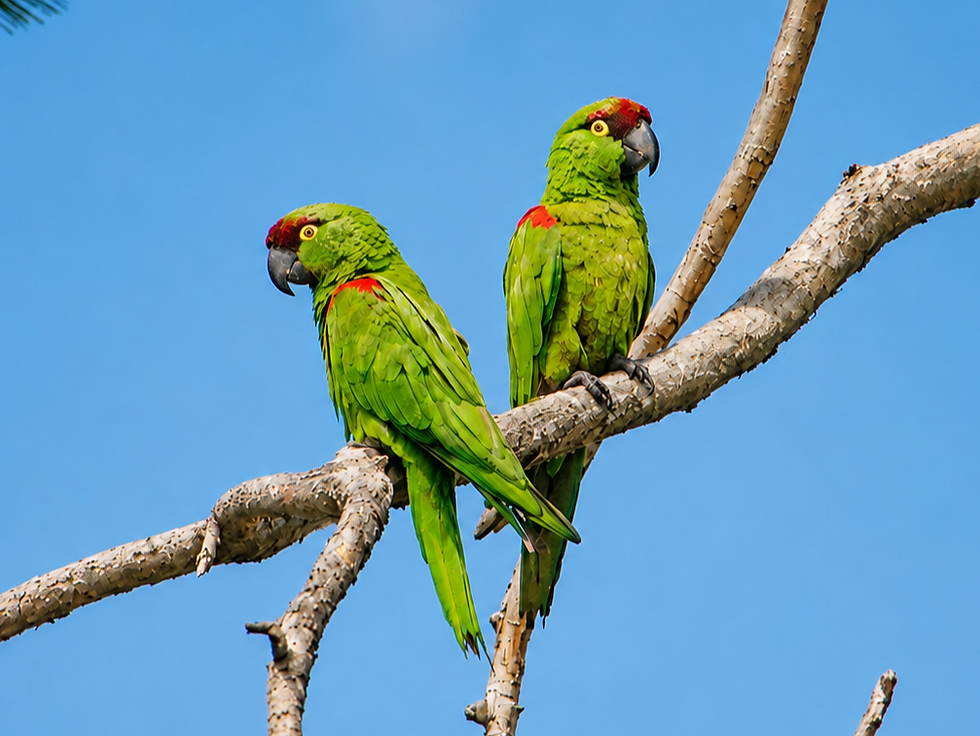
Day 1 — Arrivals to Monterrey International Airport (DLH). Guests arrive in Monterrey throughout the afternoon and settle in for an overnight stay. This evening is relaxed, we gather for a welcome dinner, and to preview the week ahead. Overnight: Antaris Valle, Monterrey. Day 2 — Chihuahuan Desert & Sierra Madre Oriental Montane Forest. We begin with an early departure from Monterrey - heading south into the Chihuahuan Desert. This landscape of wide basins, scrubby foothills, and scattered yucca supports a unique suite of birds found nowhere else in Mexico. Our primary target is the Worthen’s Sparrow, a highly localized species that favors open desert grasslands with scattered shrubs. While searching for Worthen’s, we also explore the surrounding desert for additional species, expect Scaled Quail, Burrowing Owl, Cassin’s Kingbird, Black-throated Sparrow, Black-vented Oriole, and Black-tailed Gnatcatcher. The scenery here is expansive and quiet, offering a beautiful contrast to the forested mountains we’ll visit later in the day. By late morning, we climb into the montane forests of the Sierra Madre Oriental, where the habitat shifts dramatically into cool pine–oak woodland. This region holds several high‑elevation target species, and we’ll make multiple stops along the mountain road to explore different forest layers. Key birds here include Hooded Yellowthroat, Colima Warbler, Pine Flycatcher, and Russet Nightingale-Thrush, along with a variety of mixed‑flock species typical of mid‑elevation forest. The terrain is a blend of roadside birding and short walks on forest trails, offering excellent opportunities to observe birds in shaded canyons and sunlit ridges. We return to Monterrey in the late afternoon, with time to relax before tomorrow’s exploration of Cumbres de Monterrey National Park. Overnight: Antaris Valle, Monterrey. Day 3 — Cumbres de Monterrey National Park & La Estanzuela. We begin the morning exploring Cumbres de Monterrey National Park, a vast protected area known for its rugged limestone cliffs, deep canyons, and cool pine–oak forest. The park’s elevation and geology create ideal conditions for several regional specialties, and our first stop is one of the most impressive features of the entire itinerary: a towering cliff that supports one of the largest known nesting colonies of Maroon-fronted Parrot. Watching these striking parrots move across the cliff face is a highlight for many birders, and we’ll take time to enjoy their behavior, calls, and interactions. Beyond the colony, we make additional stops along the mountain road to explore forest edges, canyon overlooks, and shaded ravines. As we work through this rich habitat, other species are possible including Crescent-chested Warbler, Rufous capped Warbler, Blue-throated Mountain-gem, Olive Warbler, Mexican Jay, Brown-backed Solitaire, Coppery-tailed Trogon, Hepatic Tanager, Painted Redstart, and Yellow-eyed Junco. The terrain here is a blend of roadside birding and short walks on uneven paths, with cooler temperatures and sweeping views of the Sierra Madre Oriental. In the afternoon, we return to Monterrey and visit La Estanzuela, a beautiful city park that feels worlds away from the urban environment around it. This protected area features clear streams, lush riparian corridors, and mature forest that attracts a wide variety of birds. We’ll spend time walking shaded trails and exploring the park’s diverse microhabitats. The slower pace here offers a relaxing contrast to the morning’s mountain birding, and the combination of riparian species, forest birds, and scenic surroundings makes La Estanzuela a favorite stop for many guests. Here expect Red-billed Pigeon, Gray-collared and Rose-throated Becards, Dusky-capped Flycatcher, Ferruginous Pygmy-Owl, Collared Forest-Falcon, Yellow-green Vireo, Spot-breasted Wren, Tropical Parula, Golden-crowned Warbler, Flame-colored Tanager, White-winged Tanager, and Crimson-collared Grosbeak, to name a few. We return to our hotel in the early evening, with time to rest and prepare for tomorrow’s journey into Chipinque and our transfer south toward Gómez Farías. Overnight: Antaris Valle, Monterrey.Day 4 — Chipinque Ecological Park & Transfer to Gómez Farías. We begin the day in the cool pine–oak forest of Chipinque before making our way to Gómez Farías, where tropical lowlands, river corridors, and agricultural valleys introduce an entirely new suite of species. We start early and head into Parque Ecológico Chipinque, a protected area perched on the mountains overlooking Monterrey. Chipinque’s network of forested roads and trails offers excellent access to pine–oak habitat, and the morning here is often lively with mixed flocks, montane flycatchers, and regional specialties. The elevation provides cooler temperatures and sweeping views of the city far below, and we’ll make several stops to explore forest edges, shaded ravines, and open overlooks. Chipinque is a reliable place for a number of northeastern Mexico species, and the relaxed pace of the morning allows time to enjoy both birds and scenery before beginning our southbound travel. Notable species in this location include Golden-olive Woodpecker, Band-tailed Pigeon, Mexican Whip-poor-will, Blue-capped Motmot, Streaked Flycatcher, Rufous-capped Brushfinch, Bridled Titmouse, Ladder-backed Woodpecker, Audubon’s Oriole, Zone-tailed Hawk, and Canyon Wren. By mid‑morning, we begin our drive toward Gómez Farías, a welcoming town at the base of the El Cielo Biosphere Reserve. The journey takes approximately 4.5 hours, with lunch planned along the way. As we move south, the landscape gradually shifts from arid foothills to greener, more humid lowlands, signaling our transition into the tropical portion of the itinerary. Upon arrival, we check in at Casa de Piedra B&B, our comfortable base for exploring the region over the next days. In the late afternoon, we head into the lowlands around La Florida and Bocatoma, where river corridors and agricultural fields create a mosaic of habitats rich with birdlife. One of the highlights here is a boat trip along a quiet river, offering close views of species such as Sungrebe, Boat-billed Heron, Ringed, Amazon, and Green Kingfishers, Muscovy Duck, Bare-throated Tiger-Heron, Boat-billed Flycatcher, and Plain Chachalaca. Nearby agricultural areas provide opportunities for Aplomado Falcon, Montezuma Oropendola, Tamaulipas Crow, Double-striped Thick-Knee, and Altamira Yellowthroat, each occupying distinct niches within the valley. The diversity of habitats in a compact area makes this an excellent introduction to the Gómez Farías lowlands. After dinner, guests have the option to search for nocturnal species including Tawny-collared Nightjar, Stygian Owl, Northern Potoo, and Mottled Owl. These outings are optional, relaxed, and short, offering a chance to experience the nighttime soundscape of the region. Overnight: Casa de Piedra B&B, Gómez Farías. Day 5 — El Cielo: Alta Cima & Mid‑Elevation Forests. Today is our first full immersion into the El Cielo Biosphere Reserve, a UNESCO‑recognized region known for its dramatic elevation gradients, cloud forests, waterfalls, and exceptional biodiversity. We spend the day traveling up the mountain from Gómez Farías to the village of Alta Cima, birding along the way and exploring mid‑elevation forest on foot. This is a scenic, rewarding day with cooler temperatures, lush vegetation, and excellent opportunities for regional specialties. We begin early, boarding a local 4x4 truck outfitted with benches in the bed—an authentic and comfortable way to navigate the steep mountain road. As we climb, the landscape shifts quickly from lowland tropical forest to humid mid‑elevation woodland, with sweeping views of the valley below. We make multiple stops along the road to explore forest edges, shaded ravines, and overlooks. These habitats support a rich mix of species, and the changing elevation allows us to target birds that are restricted to specific forest layers. The morning is typically cool and active, with excellent opportunities for mixed flocks, forest flycatchers, thrushes, and other mid‑elevation specialties, including the possibility of finding Military Macaw (rare and unpredictable). By late morning we reach Alta Cima, a small mountain village surrounded by lush forest and mist‑covered ridges. Birding here is primarily on foot, with quiet roads and trails offering easy access to excellent habitat. The scenery is beautiful with dense vegetation, cool air, and occasional glimpses of waterfalls or cloud banks drifting across the slopes. Notable species here include Ornate Hawk Eagle, Barred Antshrike, Smoky-brown Woodpecker, Blue Mockingbird, Yellow-faced Grassquit, Tamaulipas Pygmy-Owl, Cinnamon-belled Saltator, Rufous-browed Peppershrike, Bat Falcon, Crested Guan, Wedge-tailed Sabrewing, and Singing Quail. Depending on remaining targets, we may explore additional forest patches around the village or continue higher into the reserve. In the afternoon, we adjust our plan based on the species still on our list. If needed, we continue farther up the mountain to reach higher‑elevation habitat. Otherwise, we begin a slow descent, stopping at productive locations we passed earlier in the day. This flexible approach allows us to maximize opportunities for target species while enjoying the varied forest structure and scenic viewpoints that make El Cielo so memorable. Overnight: Casa de Piedra B&B, Gómez Farías. Day 6 — El Azteca Road & Return to Monterrey. We begin early on El Azteca Road, a gently winding track that moves through humid forest and dense vegetation, prime habitat for some of the reserve’s most elusive birds. This is one of the best places in northeastern Mexico to encounter Thicket Tinamou, whose soft calls often echo from the understory. The area also offers occasional chances for Great Curassow, a striking species that sometimes appears along forest edges or shaded clearings. As we continue, the road leads us to excellent habitat for the endemic Altamira Yellowthroat, Common Squirrel-Cuckoo, Ivory-billed Woodcreeper, Social Flycatcher, Lineated Woodpecker, Masked Tityra, Melodious Blackbird, Red-lored Amazon, and Yellow-throated Euphonia. After lunch, we begin the approximately 4.5‑hour drive back to Monterrey. The route retraces our path through the lowlands and foothills, gradually transitioning back into the arid landscapes surrounding the city. We arrive in Monterrey in the late afternoon or early evening, settling in for our final night of the itinerary. Overnight: Antaris Valle, Monterrey.Day 7 — Tour Conclusion & Departures. This morning is reserved for departures from Monterrey. After several days exploring the desert basins, montane forests, river lowlands, and cloud‑wrapped slopes of El Cielo, guests enjoy a relaxed start to the day before heading to the airport for their flights home. With departures throughout the morning, the tour concludes in Monterrey. Guests leave with a rewarding mix of specialty species, varied habitats, and memorable experiences from one of northeastern Mexico’s most diverse birding regions.